


Panathlon International: Two Days of Discussions with District Presidents
Published in News from Panathlon International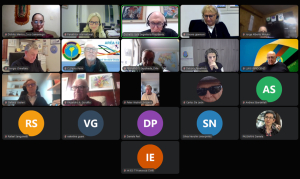
On November 17 and 18, the District Presidents’ Committee met online, with the support of the International Board and International President Giorgio Chinellato.
The meeting was attended by representatives from the Districts of Argentina, Austria, Belgium, Chile, Italy, Mexico, Peru, Switzerland, and Uruguay, as well as representatives from clubs not affiliated with a District: San Marino and Santo Domingo.
Past President Pierre Zappelli reported on behalf of the France District, while International Board Member Carlos De León presented the activities of the Panathlon Club Colombia.
The two-day event provided an important opportunity for dialogue and sharing regarding the numerous activities carried out in various countries, international projects, and new opportunities for the Movement’s development. Particular attention was given to membership growth, expansion into new territories, the involvement of young people, and the strengthening of collaboration among the Districts.
It was a constructive exchange, characterized by active participation and a shared commitment to promoting the values of sports and fair play.
The reflections and proposals that emerged will be brought to the attention of the next International Board meeting in December, confirming the commitment to strengthening a Panathlon that is increasingly united, dynamic, and active on the international stage.
Panathlon Distrito Brazil - Projeto do Panathlon protege crianças e jovens
Published in News from Districts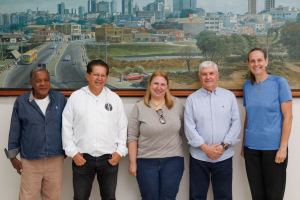
09 de Novembro - Diretores do Panathlon Club Sorocaba visitaram a Fundação Ubaldino do Amaral (FUA), mantenedora do jornal Cruzeiro do Sul e do Colégio Poli, ontem (9), para apresentar um projeto-piloto voltado à proteção de crianças e jovens no ambiente esportivo. A proposta foi bem recebida pela presidência da Fundação e, em reunião preliminar, também pela direção do Colégio Poli, que deve atuar como parceiro na iniciativa.
Segundo Antônio Carlos Bramante, de 77 anos, presidente da Comissão de Cultura, Educação e Pesquisa do Panathlon Internacional, o projeto nasce da preocupação com os casos de abuso de crianças e adolescentes, que, de acordo com ele, também ocorrem no meio esportivo. "Nós sabemos muito bem que há, hoje em dia, uma situação bastante delicada", afirmou.
A ideia é que o projeto seja replicado nos clubes do Panathlon no Brasil e na América Latina e, com aprovação mundial, nos cerca de 300 clubes da entidade.
O projeto se apoia no tripé cultura, educação e pesquisa, foco da comissão presidida por Bramante. As atividades começam em 8 de março, Dia Internacional da Mulher, e vão até a Copa do Mundo Feminina, em junho e julho.
Durante o período, a cada mês, serão desenvolvidas ações com crianças e adolescentes sobre o tema da segurança, especialmente das meninas, começando pelas artes. Na área da educação, o Poli deve trabalhar o assunto semana a semana, com o envolvimento de alunos e alunas. "Nós, que somos homens, temos que aprender a respeitar cada vez mais as mulheres", disse Bramante, ao defender a participação dos meninos.
Em junho de 2027, está prevista a realização de um evento acadêmico para discutir o tema, em Sorocaba.
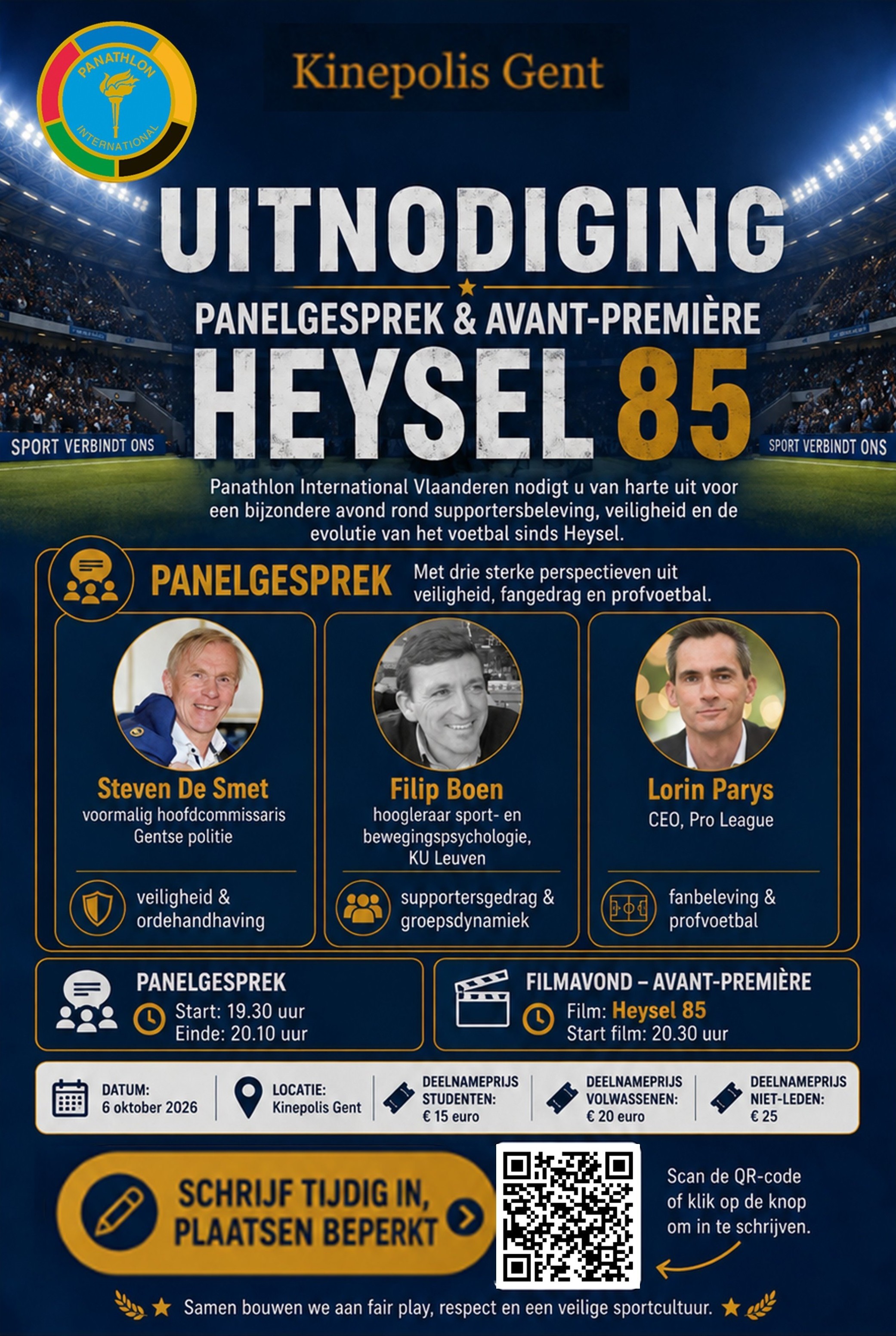
Panathlon Club Vlaanderen - Heysel 85: A Compelling Film and a Critical Look at Today's Football Safety Culture
Published in EWoS (en)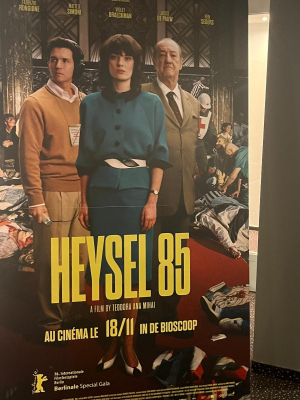
On October 6, Panathlon Vlaanderen organized a debate on the aftermath of the 1985 Heysel disaster. The occasion was the premiere screening of the film Heyzel 85, in which director Teodora Ana Mihai reconstructs the disaster of May 29, 1985, where 39 people lost their lives.
The film stays away from the pitch and focuses on what happens behind the scenes—concentrating heavily on the outrage over chaotic preparations, a slow response, and an irresponsible power play. The main fictional characters are Marie, daughter and press spokesperson for the Mayor of Brussels, and Luca Rossi, a journalist. They are torn between their professional duty, family bonds, and the human tragedies unfolding before their eyes.
The organizers surrounding the final seem to view the stadium and ticket distribution as a purely logistical task. According to their logic, safety becomes a police matter rather than an organizational responsibility. The security forces, in turn, point to unclear orders and a lack of leadership. The unfortunate result is a situation where no one has a complete overview, yet no one dares to take control either. Local politics, embodied by the mayor, hides behind communication strategies and image management. The federal government keeps its distance, as if a major stadium in the capital were not a top priority. The outcome is a chain reaction where every link can shift blame to the next.
The film demonstrates that a disaster rarely has just one person to blame, but rather many people who fail to take responsibility. This makes its critique timeless, serving as a mirror for contemporary football politics. No matter how many well-intentioned measures clubs adopt today, the pattern remains. After Heysel, new laws and stadium bans were introduced, but the reflex remained purely reactive—action only follows an incident.
With every serious riot, the debate among clubs, cities, police, and responsible ministers repeats itself over who pays for what and who decides. Clubs, often severely limited in their scope of action, point to the police, cities point to the clubs, and higher government points to the cities. As a result, high-risk, high-cost matches become a dispute over expenses rather than a discussion about prevention. Stadium infrastructure also remains a political issue where decisions drag on for years, with Belgian building permit policies certainly sharing part of the blame.
The strongest point of the film is that the viewer sees the people who suffer the consequences: supporters, rescue workers, and family members. They have zero influence over the organizational structures that put them at risk.
Heysel 85 therefore advocates for a clear authority with ultimate responsibility and treats safety as a non-negotiable prerequisite, not a delayed reaction. Panathlon Flanders can only help spread this message—because every sports enthusiast has the right to a safe environment and a safe sporting experience.


Panathlon International’s international activities continue
Published in News from Panathlon International
Panathlon International is preparing for another important event focused on discussion and planning.
The District Presidents’ Committee has been convened virtually for 17 and 18 November 2026.
The meeting represents a significant opportunity for dialogue between the District Presidents and the International Council, with the aim of sharing projects, strategies and prospects for the development of the Panathlon movement.
Agenda
- Tuesday 17 November 2026 – Committee of District Presidents together with the CDP and, if necessary, the IC
- Wednesday 18 November 2026 – Committee of District Presidents meeting independently
- Wednesday 18 November 2026 – Committee of District Presidents together with the CDP/IC for the presentation of the final document
- PI Projects
- Development and Expansion Plan
- PI Regulations/Statutes
- Training Project
- 2027 Events Calendar
- Summary presentation of reports on the activities of District Presidents,
- Discussion.
- Drafting of the final document for the CI
YOULEAD: Advancing Training for Inclusive Sport Governance
Published in News from Panathlon International
On 10 November, partners involved in *WP2 (Research)* and the development of the training pathways met online to review progress and coordinate the next steps of the Erasmus+ *YOULEAD* project, coordinated by Panathlon International.
The discussion focused on *turning research findings into practical, accessible training resources* for young people and sport organisation leaders, promoting good governance and greater youth participation in decision-making.
Another step towards *more inclusive and participatory sport governance*!!
On 10 November 2026, Panathlon International held the first meeting with its new EU Project Officer within the Erasmus+ Sport project YOULEAD.
The online meeting provided an opportunity for introductions, as well as for different requests, such as clarifications on different deliverables, deadlines and reporting procedures.
We sincerely thank our new EU Project Officer, with whom the YOULEAD Consortium looks very much forward to work with.
Panathlon International in the Principality of Monaco: safer and healthier sport for all children
Published in News from Panathlon International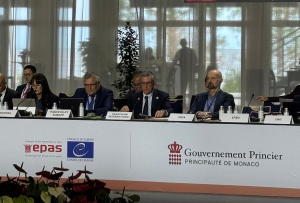
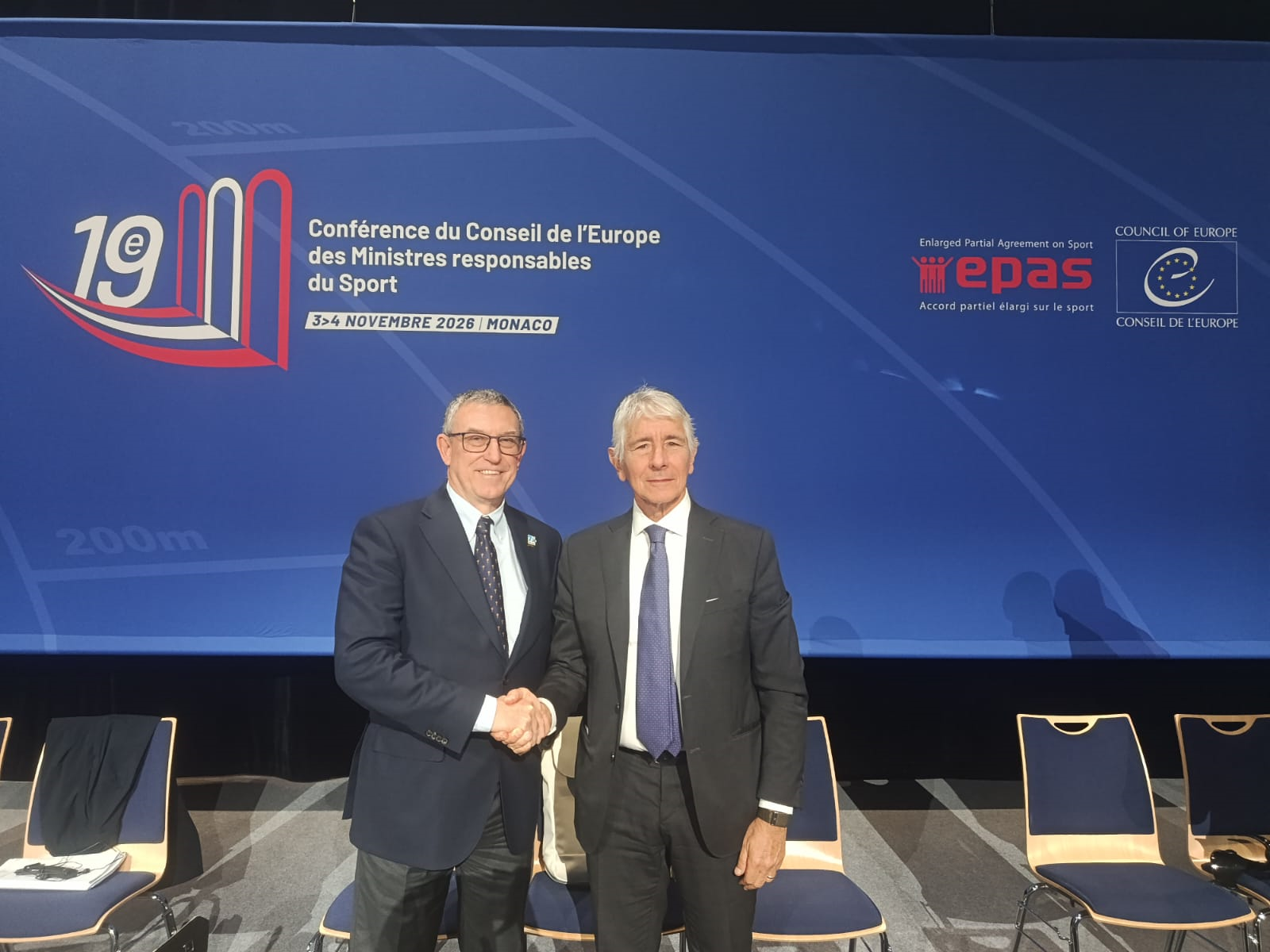
The protection of children, their wellbeing and their right to participate in sport in a safe and respectful environment were at the heart of the 19th Conference of Ministers responsible for Sport of the Council of Europe, held in Monaco on 3 and 4 November 2026, entitled “Safer and Healthier Sport for All Children”.
This international event brought together institutional representatives, experts and sports organisations to address two key priorities: preventing violence and abuse in sport, and promoting the physical and mental health of young people.
Panathlon International was represented by its International President, Giorgio Chinellato, and its youth delegate, Debora Quercioli, who attended both the EPAS Advisory Committee meeting and the Ministerial Conference.
During two speeches, International President Chinellato drew international attention to the phenomenon of hikikomori and social withdrawal amongst young people, emphasising how sport, when practised in a welcoming environment free from excessive pressure, can foster relationships, self-esteem and a sense of belonging.
He then outlined Panathlon International’s commitment in this area, ranging from the three-year agreement signed in 2025 with Hikikomori Italia ETS, through to the awareness-raising initiatives promoted by the Clubs and the round-table discussion organised at the European Parliament in Brussels in September 2026.
A second key theme was the role of collaboration between institutions and the sporting world in protecting young people. The President emphasised the importance of fostering links between schools, families, health services and sports associations, building on the experiences already developed by the Clubs: from initiatives against social withdrawal, bullying and cyberbullying, to safeguarding activities.
These experiences have given rise to the objective of building a European network of Clubs and organisations committed to preventing youth distress, to be progressively expanded at an international level. This is a process in which Panathlon International intends to act as a bridge between different areas of expertise and contexts, fostering the exchange of best practice and new partnerships.
Particular attention was also paid to the involvement of young people. The participation of the Panathlon delegate forms part of the process launched in Strasbourg last May, during which 49 young people from 32 countries drew up reflections and recommendations that were subsequently incorporated into the Conference’s proceedings. This approach aims to move beyond the mere symbolic presence of young people, recognising their right to have a say and contribute to decisions concerning their own future.
The discussion also highlighted the educational value of sport and the importance of drawing on past experiences to rethink approaches and models, moving beyond those that no longer meet the needs of the younger generations and fostering environments in which children and young people can grow, express themselves and freely develop their own identities.
For Panathlon International, participation in Munich also represented an important opportunity to strengthen relations with international institutions and organisations, forging new contacts and opportunities for dialogue that help raise awareness of the Movement and promote its values.
This commitment continues through the activities of the Clubs, educational projects and international partnerships, all with a shared goal: to make sport a place where every child can feel welcome, protected and free to be themselves.
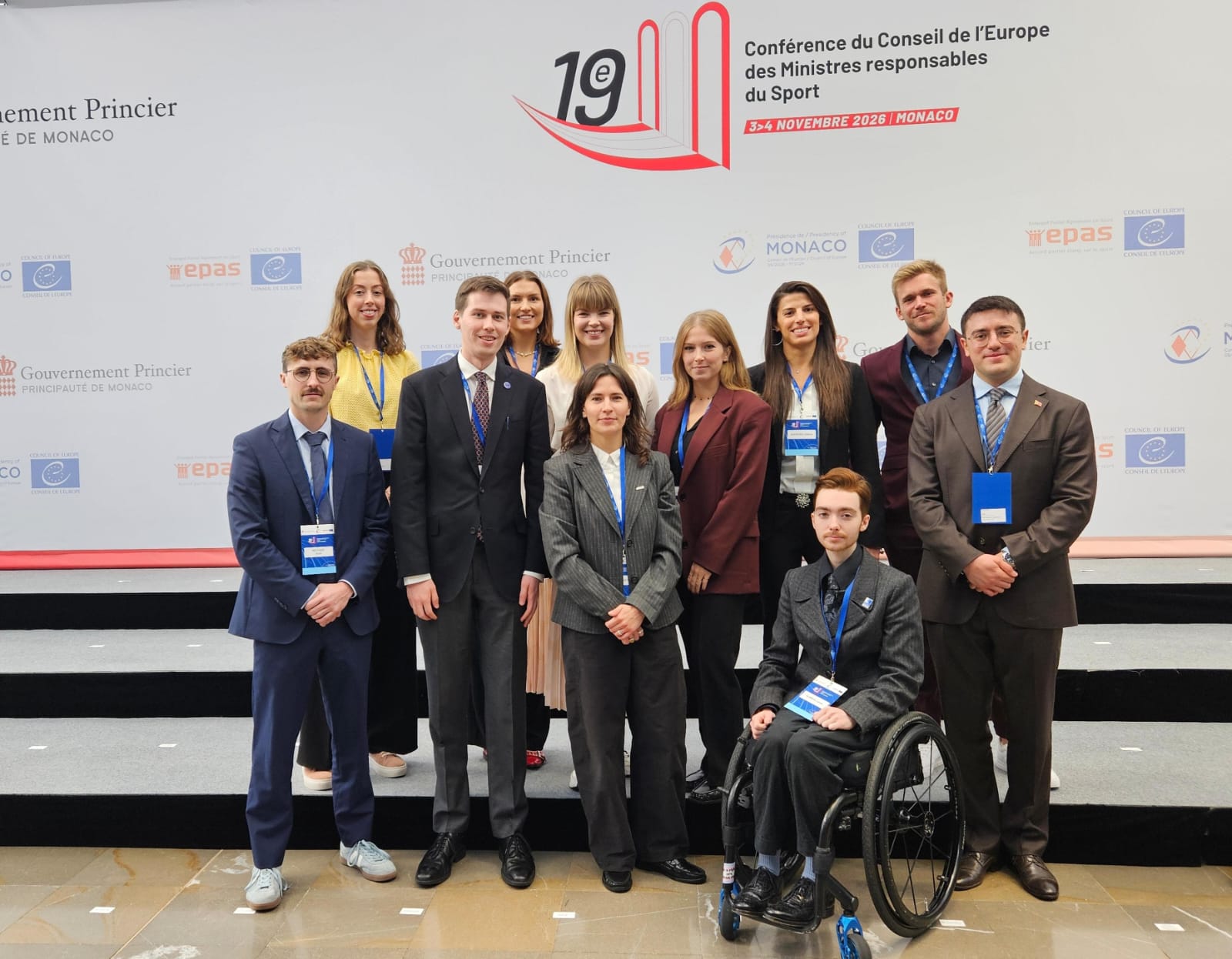
© Stéphane DANNA / Direction de la Communication

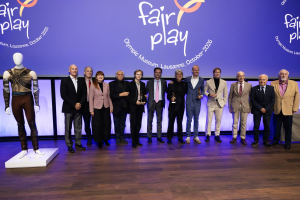
The 2025 World Fair Play Awards ceremony took place on Sunday, 11 October 2026, at the Olympic Museum in Lausanne, Switzerland, celebrating outstanding examples of sportsmanship, integrity, respect and humanity. The event was a great success, bringing together the international Fair Play community to honour individuals who embody the true values of sport.
Filip Zubčić — Pierre de Coubertin World Fair Play Trophy
The Croatian alpine skier received this award for an exceptional act of fair play, recognising his honesty and integrity in competition, even when doing so may come at the cost of sporting success.
Reflecting on his decision, Filip explained that there was never any question about what he had to do:
“It was not a question. For me, that was the end of the story. The only thing I could do was to be honest. I would never accept a result knowing that I was cheating.”
Asia Hogan-Rochester — Jean Borotra World Fair Play Trophy
The Canadian rugby player was recognised for demonstrating the spirit of fair play throughout sporting competition, embodying respect, dignity and sportsmanship. Unfortunately, this outstanding athlete was unable to attend the ceremony in person, but kindly sent us a heartfelt video message to share with everyone.
Ufuk Timer — Willi Daume World Fair Play Trophy
The Turkish recipient was honoured for his dedication to promoting fair play and using sport as a means of inclusion, social responsibility and positive change.
Speaking about what drives his work, Ufuk shared a simple yet powerful message:
“My motivation is a better world for the children.”
Tim Van de Velde — CIFP / World Athletics Fair Play Award
The Belgian steeplechase athlete received this special joint award from the International Fair Play Committee and World Athletics, recognising an outstanding example of sportsmanship and solidarity in athletics.
Reflecting on his actions, Tim emphasised that helping others is a natural part of sport and of being human:
“I had to help. A little help never hurt anybody. It just felt so natural. Fair play is not something extraordinary; it is natural. It needs to be this way.”
Ilia Malinin — Milano Cortina 2026 Fair Play Award
The American figure skater, widely known as the “Quad God”, received this special award in recognition of the values of sportsmanship and the Olympic spirit demonstrated at the Milano Cortina 2026 Olympic Winter Games.
Speaking about the joy of seeing a friend achieve his dream, Ilia highlighted the importance of friendship and mutual support:
“It just made me so happy to see him achieve his dream and achieve his goals. I wanted to be a good friend, to support him and be there for him.”
Gábor Mihály — Special Honorary Diploma
A special Honorary Diploma was presented to Hungarian sculptor Gábor Mihály, creator of the Fair Play trophies. The recognition was particularly meaningful at the Olympic Museum, where his renowned sculpture Olympia – Three Cyclists is displayed, creating a special connection between his artistic work and the values of the Fair Play movement.
The ceremony concluded on a high note, celebrating the people who make sport a force for good. The International Fair Play Committee warmly congratulates all the award recipients and sincerely thanks everyone who attended and contributed to the success of this memorable occasion.
Photos: International Olympic Committee (IOC) Photo Picture Element
YOULEAD – “Young People and Governance in Sport – From Recognition to Effective Participation”
Published in News from Panathlon International
On 5 November, from 9.00 pm to 10.30 pm, at the Ginásio Clube Português, the session “YOUTH AND GOVERNANCE IN SPORT – From Recognition to Effective Participation” will take place, in collaboration with the Erasmus+ Sport project: YOULEAD – Leading the Game: Developing Pathways for Gender-Balanced Youth Leaders in Sports Governance, coordinated by Panathlon International, which will bring together diverse experiences and perspectives for an intergenerational debate on the obstacles, opportunities and pathways that could foster more meaningful participation by young people in the life and decision-making of sports organisations.
For the Panathlon Club Lisbon, this reflection is directly in line with its mission to promote ethics, integrity and sporting values. Good governance is not limited to compliance with rules and procedures: it also requires transparency, participation, representativeness and an organisational culture capable of recognising and valuing the contribution of different generations.
Rather than simply identifying the need to renew leadership, the aim is to reflect on the conditions that will enable us to train, engage and empower the younger generations, thereby contributing to a more participatory, ethical and sustainable approach to sports governance.
The session will be moderated by Ines Caetano, a former modern pentathlon athlete and founder of Sport Embassy.